Direct Contact Water Heaters vs. Boilers: Which is Right for Your Facility?
When choosing a water heating solution for your industrial or commercial facility, the decision goes far beyond cost at point of purchase. The technology you select affects costs of energy, labor requirements, maintenance costs and long-term operational efficiency for the life of the system. Understanding the key differences between a Kemco Direct Contact Water Heater (DCWH) and a traditional steam boiler can assist you in making the smartest investment for your facility.
How Each Technology Works
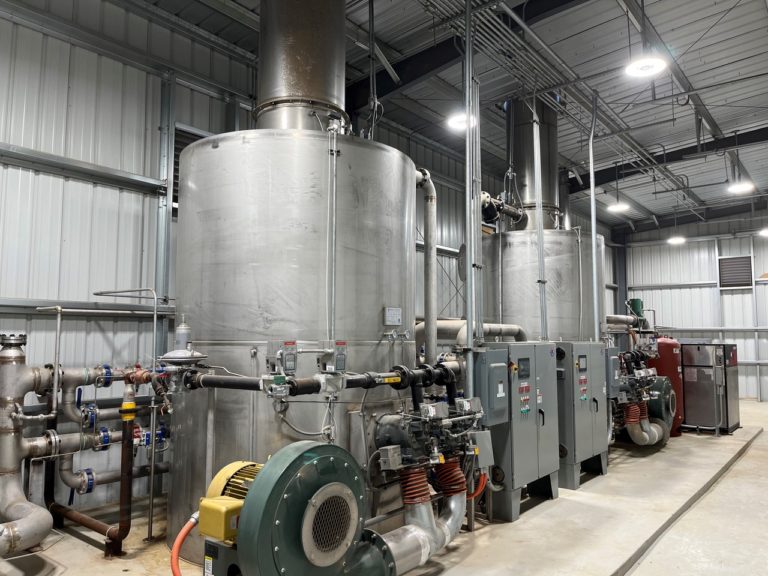
Direct contact water heaters are widely recognized as a solution to wasteful practices and a driver of improved performance. Kemco designs, engineers and manufactures fully integrated water systems tailored to your plant’s requirements. A direct contact water heater allows the products of combustion to come into direct contact with the water being heated. This process is significantly more efficient than boilers, enabling plant operators to lower fuel costs, emissions and labor costs.
Boilers
In contrast, a traditional steam boiler heats water through an indirect process. Traditional steam boilers operate by using a heat source, typically natural gas or coal, to heat water in a sealed vessel until it boils, creating pressurized steam. Then, the steam expands. It rises through pipes to heat exchange surfaces, where it releases heat, causing it to condense back into water and return to the boiler via system pressure or a pump. Because the system operates under high pressure, it requires more maintenance to remain compliant with regulations like safety controls, regular inspections or licensed operators. Though boilers have been common in facilities for generations, their indirect heat transfer process limits efficiency. Indirect heating methods create a delay between energy input and hot water output, hindering on-demand availability for facility washdowns. This wasted energy translates directly to higher fuel costs.
Key Factors That Affect Life Cycle Costs
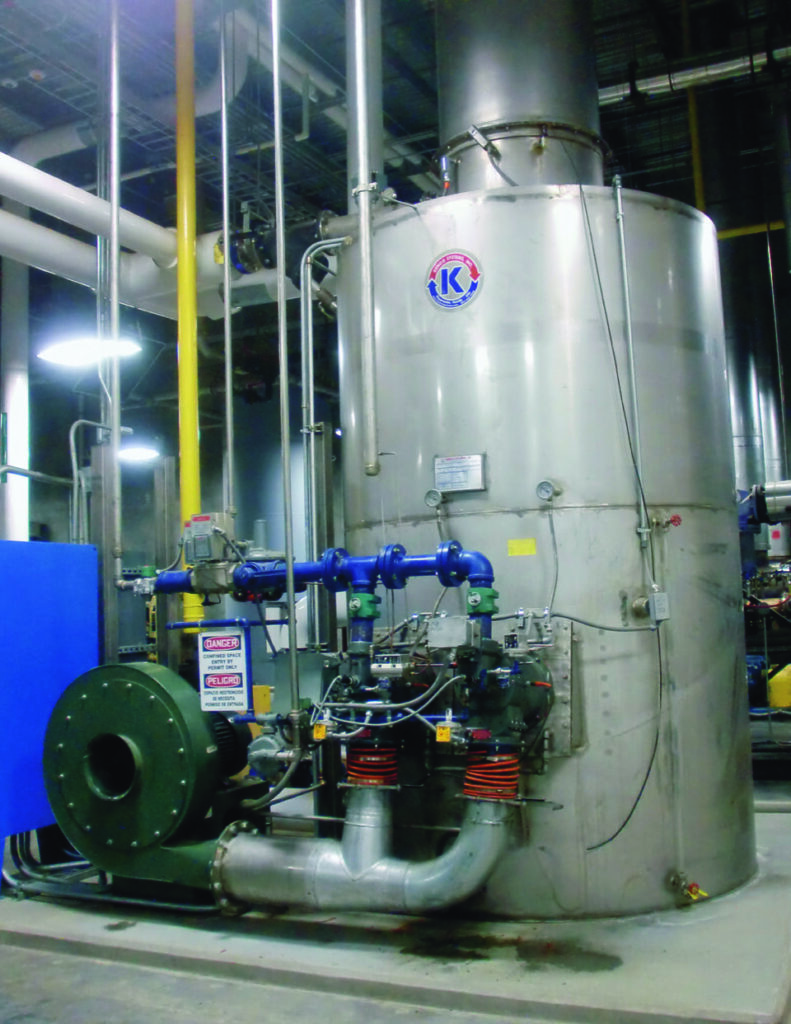
Direct contact water heaters are widely recognized as a solution to wasteful practices and a driver of improved performance. Kemco designs, engineers and manufactures fully integrated water systems tailored to your plant’s requirements. A direct contact water heater allows the products of combustion to come into direct contact with the water being heated. This process is significantly more efficient than boilers, enabling plant operators to lower fuel costs, emissions and labor costs.
The Key Difference Between Direct Contact Water Heaters and Boilers: Energy Efficiency
Direct contact water heaters are widely recognized as a solution to wasteful practices and a driver of improved performance. Kemco designs, engineers and manufactures fully integrated water systems tailored to your plant’s requirements. A direct contact water heater allows the products of combustion to come into direct contact with the water being heated. This process is significantly more efficient than boilers, enabling plant operators to lower fuel costs, emissions and labor costs.
Labor and Compliance Costs
Because a steam boiler is a pressurized vessel it is subject to federal, state and local safety regulations. Boilers require certified operators, extensive maintenance and are subject to stringent safety regulations, adding significant overhead. A Kemco DCWH is a non-pressurized vessel, eliminating those requirements entirely, and Kemco offers comprehensive service and maintenance support for its systems, which makes a significant difference.
Maintenance Requirements
Boilers require regular maintenance and inspection to meet compliance. Kemco’s DCWH burns up to 80% oxygen in the water, dramatically reducing oxidation and corrosion in pipes and plumbing. Stainless steel construction and simpler design mean lower ongoing maintenance costs. Kemco prepipes all equipment in 304 stainless steel to assure years of trouble-free service. We include factory start-up and training with every system we sell.
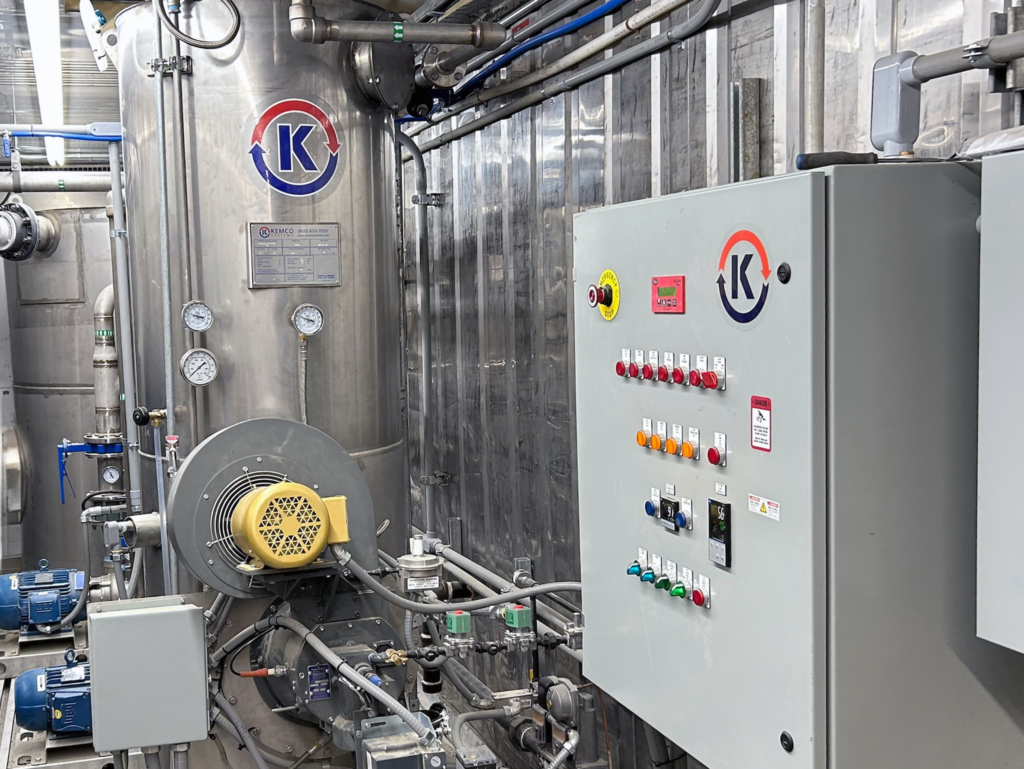
Key Operational Advantages of Kemco’s DCWH
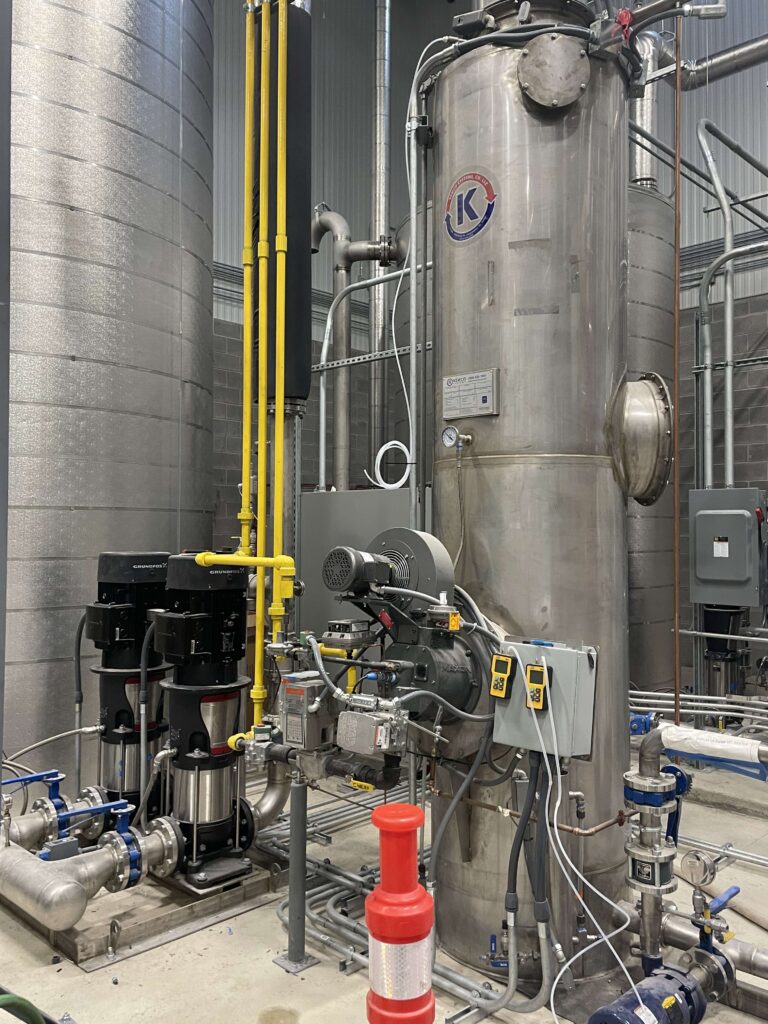
- Cool-Wall Water Jacket Design: The combustion chamber is surrounded by a water jacket that functions as a heat sink to preserve vessel integrity. This jacket remains filled with static water during operation to dissipate heat from combustion, while direct contact between flue gas and water in the lower vessel section maximizes thermal efficiency.
- Double-Walled Discharge Sleeve: The burner mounting point features a double-walled discharge sleeve with constant water flow to dissipate direct heat from the burner, protecting critical components.
- Flame Shield Protection: A patented flame shield prevents falling water droplets from impinging on the burner flame within the combustion chamber, ensuring stable burner performance and complete combustion.
- Low NOx Emissions and NSF Compliance: Kemco offers Low NOx models and is committed to maintaining NSF-Certified standards, ensuring that its systems meet the strictest environmental and food safety regulations.
For facilities that depend on larger volumes of hot water, the choice between a DCWH and a traditional boiler has long-term financial and operational consequences. Kemco’s DCWH consistently outperforms traditional boilers across energy efficiency, labor, maintenance and compliance costs.
Considering water heating technologies for your facility? Consult with our team and learn how Kemco’s Direct Contact Water Heater can reduce your energy costs. To learn more about the DCWH, contact our team.